From chaos to clarity: how we redesigned the operational data experience at iFood
I transformed fragmented reports into a unified and visual experience, with comparisons between stores and automatic recommendations. The result: more autonomy for partners and real gains in operational efficiency.
UX Strategy
Research
Data & Metrics
UX/UI Design
Context
Challenge/Problem
Partner restaurants of iFood had difficulty accessing and interpreting operational data. The information was scattered across different reports and spreadsheets, requiring manual work, low confidence in the numbers, and a strong reliance on account executives to make decisions.
Solution
We developed an Operational Performance MVP that consolidated reports into a single view, brought comparative dashboards between stores, and initiated automation of recommendations for critical issues (delays and NRE). This ensured more autonomy for partners, clarity in the data, and efficiency for the iFood team.
Tools used:
Figma
figjam
google meet
hotjar
userpilot
databricks
jira
goals
Design Process
From discovery to delivery, I led the design process along with the Quality squad of the operation.
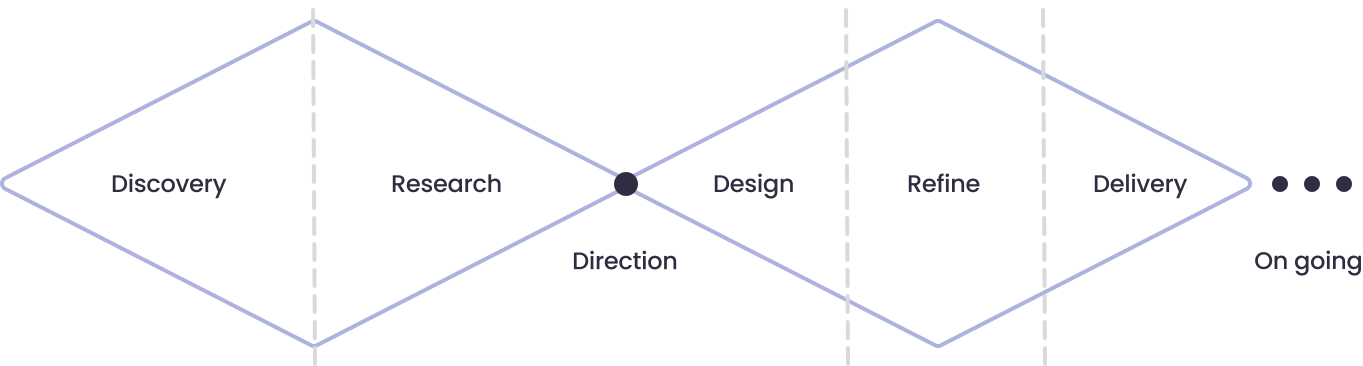
Discovery
KPI
OKR
analytics
csd matrix
desk research
The Challenge
iFood's mission is to support its partners — restaurants of all sizes — to grow sustainably. However, in practice, there was a recurring obstacle: partners were unable to access, interpret, and act quickly on their operational data.
Cancellations, delays, and operational failures were directly linked to lost sales and a decline in the “Super” and Logistic Score, essential metrics for success within the platform.
Although we already provided dashboards and reports, the process was fragmented, manual, and not very intuitive. Many managers needed to export data, cross-reference information in spreadsheets, or rely on account executives to interpret basic numbers.
This scenario generated frustration: the errors repeated, decisions were slow, and the executives at iFood were overloaded with operational tasks, leaving aside the strategic analyses that could truly generate value.
Research
archetypes
data analysis
questionnaire
benchmark
Exploratory visits
My approach
As a Product Designer, I conducted a deep discovery process. We visited restaurant operations, interviewed owners, managers, and consultants, and analyzed how each partner profile consumed the data.
We also investigated benchmarks in global players, such as Uber Eats and Rappi, to understand how the market was evolving.
When mapping the journey, we identified four distinct maturity profiles:
Experienced, who were already integrating data via API and seeking sophisticated comparisons
Optimized, which still depended on manual exports but had a structured analysis routine
Effortful, multitasking managers who conducted quick analyses in spreadsheets
Beginners, who accessed only basic views on the Portal
This segmentation was essential for designing solutions that catered to everyone from the most advanced to the most basic users, without creating barriers to usage.
Direction
prioritization
value x effort matrix
MVP
The strategy
In light of the discoveries, we structured a clear strategy: to excel in the basics before moving on to sophisticated solutions. This translated into an MVP with three fronts:
Unified and Exportable Reports
Consolidating quality operation indicators, cancellations, and negotiations into a single reliable source.
Ranking and visual panels
Allowing brands to compare stores with each other and quickly identify the best and worst performances.
Initial Recommendations
Automating insights for the most critical problems (delays and NRE) with simple decision trees, helping partners to act immediately.
This prioritization was guided by a value x effort matrix, ensuring high impact with quick deliveries, while we leave more complex items for the future roadmap such as open APIs, intelligent diagnostics by seasonality, and automatic feedback of recommendations.
Design
wireframe
design system
low-fidelity prototype
usability
Refine
event mapping
use cases
exception cases
high-fidelity prototype
Delivery
navigable prototype
handoff
Ongoing
data analysis
performance tracking
The impact
With the MVP, partners gained access to clear reports, comparisons between stores, and practical guidance. This provided more autonomy for multitasking managers, reduced reliance on account executives, and increased confidence in the data.
For iFood, the impact was twofold:
Operational, with executives more focused on strategic analyses than on manual extractions.
Business, with improvements in cancellation and NRE indicators, protection of the Super, and advancement in partner experience.
Learnings
This project showed me that, in the end, data is not just for measuring performance, but for guiding real decisions in the day-to-day operations. The role of design here was to transform complexity into clarity — from fragmented spreadsheets to a simple, reliable, and actionable experience.
And more than creating screens, we create a new habit in the partners: to look at their numbers and act quickly. This cultural change is, for me, the greatest sign of success of this case study.
✨ This case reinforces my skills in: leading problem discovery processes and how to turn findings into product opportunities.
Want to know more details?
Contact me and let's talk! I can tell you more about my work process and the design decisions articulated in this study.
Gabriela Lara
Senior Product Designer
Copyright © 2025 Gabriela Lara.